The full card, graded


The breakdown
Conor McGregor is 10-4 in 14 UFC fights and has not competed in the octagon since July 10, 2021, when a doctor's stoppage ended his first round against Dustin Poirier. That was his second straight loss to Poirier and his third defeat in five. Max Holloway has 32 UFC fights and a 23-9 record, has fought in every recent year, and comes in off a five-round decision loss to Charles Oliveira in March, with knockouts of Justin Gaethje and Chan Sung Jung and a decision win over Poirier in the same window. The model leans to Holloway at 65.2%.
The lean is clear without being a firm one, and the gap it is built on is activity. Holloway's path is simply to use the round count, since he has been to the judges and back inside the last 18 months while McGregor has not fought at all in five years. McGregor's path is the one his record has always described, a knockout, and the Eddie Alvarez and Donald Cerrone finishes say he needs less time than most to find one. The interesting part is the method read: with a five-year layoff on one side and 32 fights on the other, the model still calls decision the likeliest outcome, which is an expectation of Holloway's durability holding the fight into deep water.
- Layoff against volume, with McGregor's last octagon appearance in July 2021
- Holloway has fought recently and often; McGregor's last five span nearly five years
- McGregor's path is an early knockout, the way his Alvarez and Cerrone wins ended
- Five rounds scheduled, a distance Holloway has worked often and McGregor has not seen since 2021
- A clear lean, not a firm one, and the layoff is the largest unknown in it


The breakdown
Song Yadong arrives 12-4-1 across 17 UFC appearances, with a recent stretch that alternates results: decision wins over Chris Gutierrez and Henry Cejudo, decision losses to Petr Yan and Sean O'Malley, then a second-round submission of Deiveson Figueiredo in May. Umar Nurmagomedov is 8-1 through nine UFC fights, and all five of his most recent bouts went to the judges, including the unanimous-decision loss to Merab Dvalishvili in a bantamweight title fight in January 2025. Since that loss he has decisioned Mario Bautista and Figueiredo. The model has Nurmagomedov HIGH at 71.5%.
HIGH on a five-round bantamweight fight is the model saying it sees a structural gap rather than a preference. Nurmagomedov's path is the one his record already writes for him: bank rounds, keep the fight in judged territory, where nine of his last 10 UFC results have been settled. Song's path is the one he showed against Figueiredo, the only stoppage in his last five, and the fastest way to make a five-round read irrelevant. The tell is the shared opponent: Song submitted Figueiredo in two rounds where Nurmagomedov needed 15 minutes, and the model still lands this far to the Russian, which means it is weighting the consistency of the record over the finish.
- Decision-shaped matchup on paper, with nine of the two men's last 10 results going to the judges
- Song's four-fight alternating win-loss pattern against Nurmagomedov's single UFC defeat
- Song's path is the Figueiredo script, a finish before the scorecards matter
- Bantamweight over five rounds, championship distance and championship pacing
- HIGH tier, the firmest read on the card

The breakdown
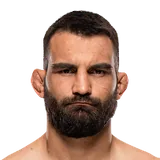
Benoit Saint Denis is 9-3 in 12 UFC fights and has finished each of his last four, two submissions and two knockouts, against Kyle Prepolec, Mauricio Ruffy, Beneil Dariush and Dan Hooker. None of those went past the second round. Paddy Pimblett is 7-1 through eight UFC appearances, with decisions over Jared Gordon and Tony Ferguson, a first-round submission of King Green and a third-round knockout of Michael Chandler, before dropping a five-round decision to Justin Gaethje in an interim lightweight title fight in January. The model has Saint Denis at 52.3%, close to even.
The numbers barely separate these two, and the read is close to even. Saint Denis' path is the one that has worked four times running: force the fight to end early, since he has not needed a third round since 2024. Pimblett's path is the one the Gaethje fight showed, surviving into the later stages and letting his own submission and knockout threats show up after the opening exchanges. The tell is that the model calls decision the likeliest method in a fight where both men's recent wins have mostly been finishes, which reads as a refusal to pick a finisher when both qualify.
- Two finishers pointed at each other, with seven stoppages between their recent wins
- Saint Denis on four straight, Pimblett coming off his first UFC loss
- Pimblett's path is the championship rounds he already went to against Gaethje, compressed into three
- Lightweight over three rounds, which favours whoever lands first
- Close to even, one of the closest reads on the card


The breakdown
Cory Sandhagen is 11-5 in 16 UFC fights, with a five-round split decision over Marlon Vera, a second-round stoppage of Deiveson Figueiredo after Figueiredo hurt his knee, and losses in his last outings at that distance to Umar Nurmagomedov and to Merab Dvalishvili in a bantamweight title fight last October. Mario Bautista is 11-3 through 14 UFC appearances and has won four of his last five, including decisions over Ricky Simon, Jose Aldo and Patchy Mix and a second-round submission of Vinicius Oliveira in February.
Both men have been measured against the same yardstick and came up short, which is the cleanest comparison available here. Sandhagen's path is a finish before the scorecards get involved, as in the Figueiredo fight, though that stoppage came from an injury, since four of his last five went the full distance and two of those went against him. Bautista's path is the grinding decision, the method behind three of his last four wins, and it works better across three rounds than five. The tell is how narrow the model keeps this: Sandhagen has fought at the top of the division more recently, and it still only moves him a few points clear.
- Two decision-heavy bantamweights, with eight of their last 10 results going to the judges
- Bautista is 4-1 in his last five; Sandhagen has lost two of his
- Bautista's path is the same rounds-banking decision that took care of Simon, Aldo and Mix
- Bantamweight over three rounds, which trims Sandhagen's usual late-fight room
- A modest lean, one of the closer reads on the card


The breakdown
Brandon Royval is 7-5 in 12 UFC fights, with split-decision wins over Brandon Moreno and Tatsuro Taira and a five-round decision loss to Alexandre Pantoja in a flyweight title fight in December 2023. His recent form has turned: a decision loss to Joshua Van last June and a first-round knockout loss to Manel Kape in December. Lone'er Kavanagh is 3-1 in the UFC, with decision wins over Jose Ochoa and Felipe dos Santos, a second-round KO loss to Charles Johnson and a five-round unanimous decision over Moreno in February.
This is close to a coin flip, and the model's thin lean reflects it. Royval's path is his own experience, 12 UFC fights and five rounds against a champion, against an opponent with four UFC fights who beat Moreno over five rounds in February. Kavanagh's path is that win, a fighter who has just gone 25 minutes with a former champion and taken the cards. The tell is how little the model does with Royval's history: two losses in his last three, one of them a first-round knockout, and the read lands barely above a coin flip.
- Twelve UFC fights against four, and Kavanagh's latest is a five-round win over Moreno
- Royval has lost three of his last five, including a first-round knockout in December
- Kavanagh's path is the one that beat Moreno: three of his four UFC fights have gone the distance and he has won all three
- Flyweight over three rounds, a division where pace usually decides the scorecards
- Barely off even, with experience on one side and recent form on the other


The breakdown
Terrance McKinney is 8-5 in the UFC across 13 fights, and not one of his last five got out of the first round: three wins inside the distance, two losses the same way. Bobby Green, who fights in the UFC as King Green, is 16-12 with a draw and a no contest across 30 UFC fights and comes in on a three-fight win streak, a split decision over Lance Gibson Jr., a second-round KO of Daniel Zellhuber and a first-round submission of Jeremy Stephens in May. The model settles on McKinney at 50.1%, the flattest number in this group.
At 50.1% the model is admitting it cannot separate these two. McKinney's path is the one his record keeps drawing, a first-round finish before either man has settled. Green's path is surviving the opening burst, which he has not always done, since five of his 12 UFC losses ended in round one, and winning the longer fight with the experience of 30 UFC bouts. The likeliest method is a knockout, and that is the model leaning on McKinney's finishing pattern rather than on any comparison between them.
- McKinney's last five all ended in round one, win or lose
- Green is 30 UFC fights deep and on a three-fight win streak
- Green's path is surviving the first five minutes and taking it into unfamiliar territory for McKinney
- Lightweight three-rounder, though the record says the opening round decides it
- Dead-even read, the model's flattest here

The breakdown
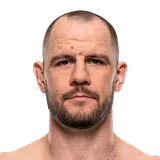
Nikita Krylov is 12-9 across 21 UFC fights, and his recent light heavyweight work swings hard both ways: two first-round knockout losses inside his last five, then a third-round knockout win against Modestas Bukauskas in January. Robert Whittaker is 17-7 across 24 UFC fights at middleweight and has lost three of his last five, the most recent a split decision across five rounds in July 2025.
This is close to even, with the model weighting Whittaker's long history of reaching the scorecards against a man whose last two defeats both came inside a round. Whittaker's path is the one the model expects, a decision earned in exchanges he can steer. Krylov's path is shorter and blunter, landing something heavy the way he did against Bukauskas. The tell is that the model has taken the fighter with three losses in his last five, which says it is reading the quality of opposition rather than the results column.
- Krylov's power against Whittaker's preference for long exchanges
- Neither man arrives on a streak; recent form is uneven on both sides
- Krylov's path is a heavy shot early, and his last three fights all ended by knockout
- Light heavyweight and middleweight records meeting over three rounds, decision the likeliest end
- A modest lean toward Whittaker, nothing firmer than that


The breakdown
Gable Steveson makes his UFC debut. Elisha Ellison has one UFC fight, a first-round knockout loss to Brando Pericic at heavyweight in September 2025, which leaves him 0-1. The model still lands on Steveson at 63.6%, a number built on almost nothing from inside the UFC.
Take this one more sceptically than the percentage suggests, because there is a single UFC fight between the pair and it ended inside a round against Ellison. Steveson's path, as the model reads it, is a knockout, the same way Ellison's only octagon night finished. Ellison's path is that one bad night says little, and that a fighter with no UFC bout at all is the greater unknown of the two. The model is working here without much evidence, so the honest word is lean rather than read.
- Steveson makes his UFC debut, and Ellison has one round of UFC film
- Ellison's only octagon appearance ended by knockout in the first
- Ellison's path is that a single early loss is a thin sample to judge him on
- Scheduled for three rounds, and the model expects it to end well short of them
- A number resting on the thinnest UFC evidence


The breakdown
Cody Garbrandt is 10-7 across 17 UFC fights and has won three of his last five, most recently a unanimous decision against Xiao Long in March. Adrian Yanez is 6-3 across 10, has one win in his last five and has been stopped twice in that run, with his March meeting with Ricky Simon going into the books without a winner. The model takes Yanez at 54.5%, which puts it against the recent results column.
Picking the man with the thinner recent ledger usually means the model is reading something other than wins and losses. Yanez's path is the one it expects, a decision built out of long exchanges. Garbrandt's path is the finish his record still shows, the first-round stoppage of Brian Kelleher being the last clean example of it. This sits close to even and the form guide argues the other way, so it is a read to hold loosely.
- Garbrandt's knockout record against a Yanez run that includes two stoppage losses
- Garbrandt holds the better recent form and the model has picked against it
- Garbrandt's path is the early finish, the way the Kelleher fight ended
- Both men's recent work is at bantamweight, three rounds, decision the likeliest end
- Close read with the results column pointing the other way


The breakdown
Luke Riley is 2-0 in the UFC, a second-round knockout of Bogdan Grad in November and a unanimous decision against Michael Aswell Jr. in March. Kai Kamaka III is 2-2-1 across five UFC fights, with wins over Tony Kelley in 2020 and, by split decision on April 4 at lightweight, Dakota Hope, a draw with Danny Chavez in July 2021, and losses to Jonathan Pearce and TJ Brown. The model reads Riley at 61.7%.
Experience is doing a share of the work here, though the numbers are close. Riley's path is the straightforward one, a decision won by staying busy against a man who has been around the UFC since 2020. Kamaka's path is that he is coming off a win only three months old and has five UFC fights to Riley's two. The model expects the scorecards, so it is reading this as a pace question rather than a power one.
- Riley's unbeaten UFC start against Kamaka's 2-2-1 octagon record
- Kamaka's last fight was a split-decision win over Dakota Hope in April, at lightweight
- Kamaka's path is that five UFC fights outweigh Riley's two
- Riley's recent work is at featherweight, three rounds, and the model expects the judges
- A clear enough lean toward Riley without being a strong one


The breakdown
Tracy Cortez is 6-2 in the UFC with a record built almost entirely on the scorecards, six decision wins and a decision loss to Rose Namajunas over five rounds. Her one finished loss came in November, a second-round submission against Erin Blanchfield. Wang Cong is 4-1 in the UFC and has won three straight by unanimous decision, the last of them in February at a catch weight. The model leans to Cortez and barely does.
This is close to even, the kind of read where one round settles everything. Cortez wins by doing what her record says she does, holding the pace across 15 minutes and banking rounds. Wang's path is the same one from the other side, and she has been the busier of the two, with three appearances since February 2025 against Cortez's two. The tell is that the model calls a decision the likeliest outcome and still cannot separate them by much.
- Two decision-heavy records pointed straight at each other
- Activity edge to Wang, three fights since February 2025 to Cortez's two
- Wang's path is taking the rounds Cortez usually banks
- Women's flyweight, three rounds, pacing decides it
- Close to even, a read the model does not commit to


The breakdown
Damian Pinas has one UFC fight on his record, a first-round knockout of Wes Schultz in February. Cesar Almeida is 3-2 across five UFC appearances, with knockouts of Dylan Budka and Abdul Razak Alhassan and losses on the cards to Roman Kopylov and, in December, Cezary Oleksiejczuk. The model favors Pinas, which means siding with one octagon appearance over five.
The lean to Pinas is a firm one, but it rests on a single UFC result that lasted a round, and that is a thin base for any read. Pinas' path is the one he has already shown, getting to Almeida early before the fight settles into a shape. Almeida's path is the back half, where his five fights of octagon time count for something Pinas has never had to answer. The tell is that the model still makes a decision the likeliest method, even after the fastest possible finish on Pinas' record.
- Almeida's knockout power against a fighter with one UFC appearance on file
- The experience gap runs the opposite way from the pick
- Almeida's path is depth, taking this past the opening five minutes
- Middleweight, three rounds, both finishing threats live early
- A firm lean built on a one-fight sample, worth more scepticism than it looks


The breakdown
Farid Basharat is 6-0 in the UFC, a unanimous decision over Da'Mon Blackshear in his debut, a first-round submission of Kleydson Rodrigues in his second fight and the four since on the scorecards, the most recent a split decision over Jean Matsumoto in February. John Garza makes his UFC debut. The model favors Basharat, with the honest caveat that half this matchup is unknown to it.
An unbeaten six-fight run against a fighter making his UFC debut is a read the model can only half-support. Basharat's path is the one he has walked four straight times, taking rounds and closing them out on the cards. Garza's path is the debut itself, since nothing in the UFC says what he cannot do. The tell is how modest the lean stays for a fighter who has not lost in the UFC.
- Basharat's decision-heavy run against an opponent making his UFC debut
- Basharat's last outing was a split decision, the narrowest of his six
- Garza's path is the unknown, with no UFC bout to weigh against him
- Bantamweight, three rounds, decision the likeliest route
- A moderate lean, held down by a debut on one side


The breakdown
Ryan Gandra has one UFC fight, a first-round knockout of Jose Daniel Medina in February. Zach Reese is 4-3 with one no contest across eight UFC fights, with wins over Julian Marquez, Medina, Dusko Todorovic and Jackson McVey, and a split-decision loss to Michel Pereira in February. The model picks Reese by the narrowest margin it can produce, which is another way of saying it is not picking anyone.
This is a coin flip. One UFC appearance sits against eight, and the two men share an opponent: Reese beat Medina on points in 2024, and Gandra stopped Medina in the first round in February. Gandra's path is a repeat of February, landing early while the fight is still loose. Reese's path is his record, a first-round KO of Marquez and a submission of McVey on the way, though two of his three losses ended inside the first round. The method is a knockout, which is where the model's read lands.
- One first-round knockout for Gandra against eight UFC fights for Reese
- Gandra's lone octagon data point came in February and lasted a round
- Gandra's path is the one he showed, ending it before anything else matters
- Middleweight, three rounds, knockout the likeliest finish
- Among the thinnest margins on the card, a genuine coin flip

The breakdown
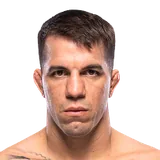
Alessandro Costa is 4-3 in the UFC and has won his last two by knockout, stopping Stewart Nicoll in the second round in April and Matt Schnell in the first in June, barely a month before this card. Cody Durden is the more experienced man at 7-8 across 16 UFC appearances, but he lost four straight, by decision, knockout and submission, before beating Jafel Filho on the cards in April. The model leans to Costa on form.
The read is trajectory. Costa is on the best run of his UFC career and has been the busier fighter, appearing in April and again in June. Durden's path is length, dragging Costa into a full three rounds and winning them the way he won in April; Costa's path is the one he has taken twice this year, finding the stoppage inside two rounds. The tell is that the model still makes a decision the likeliest method, which reads as respect for how many rounds Durden has absorbed in 16 fights.
- Costa's finishing form against a Durden record that mostly goes to the cards
- Trajectory splits them, Costa on his best run and Durden 1-4 in his last five
- Durden's path is length, taking this deep into the third
- Flyweight, three rounds, decision the likeliest route despite Costa's recent stoppages
- A lean rather than a strong call, with Costa's five-week turnaround the open question